

Capri pants are back. Typewriters are trending. And now, apparently, we are all desperately searching for a secondhand iPod.
The latest Google Trends data is telling a very specific story. Not about nostalgia exactly, not about anti-tech rebellion, and definitely not about some collective decision to reject modernity. It is about something more commercially interesting than any of that.
People want to feel things again. And they are searching for products that let them do it.
Opportunity: Businesses that position themselves as real guides to this hands-on, tactile tech movement in the next 24 days will be building audiences their competitors spend years trying to catch.
Cyberdecks Are Having a Moment – and It’s Not Just a Tech Thing
Search interest in “cyberdeck” hit an all-time high this year.
If you just typed “what is a cyberdeck” into a new tab, you are not alone. That is also a breakout search. A cyberdeck is a custom-built portable computer, assembled from components like single-board computers and compact keyboards, designed around what the builder wants it to do rather than what a manufacturer decided was commercially sensible.
“Build a cyberdeck” reached an all-time high. “Mini keyboard” did the same. And “single board computer” is at its highest search interest since 2006. These are not passive inspiration searches. These are people buying parts.
What is interesting is where they want to take these things. “Cyberdeck for music production” and “cyberdeck for reading” are the top trending use-case searches. And then, buried in the breakout data: “cyberdeck girly” and “cyberdeck for girls.”
That last one matters more than it sounds. When an aesthetic movement starts generating its own subcategories, it has moved from niche to culture. The cyberdeck is no longer just a maker-community obsession. It is becoming a personal expression device. The same logic that gave us cottagecore laptops and pastel gaming peripherals is now giving us bespoke portable computers built around individual identity rather than corporate specification.
The opportunity here is not selling cyberdecks. It is content. Tutorials. Component guides. “What can a cyberdeck do” is a breakout search with no dominant answer yet. Whoever owns that search owns the top of a very interesting funnel.
Why Gen Z Is Ditching Wireless and Hunting Down Secondhand iPods
Separately, and simultaneously, people are abandoning wireless audio.
Search interest in both “wired headphones” and “wired earbuds” hit all-time highs this year. “Portable cassette player” also reached a new peak, with Olivia Rodrigo as the top trending related search, which tells you everything you need to know about the demographic driving this.
“Secondhand iPod” broke out over the past week. The iPod is the top trending secondhand item right now. Generation Z is the top trending topic searched alongside it.
This is not a generation that grew up with iPods. They are choosing them deliberately. That is not nostalgia. That is aesthetic selection. There is a meaningful difference.
The same logic applies to the MP3 player data. “How to use mp3 player” more than doubled last week. “Mp3 player with bluetooth” hit an all-time high. People are not looking to replicate 2004. They want a dedicated listening device that is separate from their phone, with the physicality of something you can hold and scroll through, and the practicality of modern connectivity.
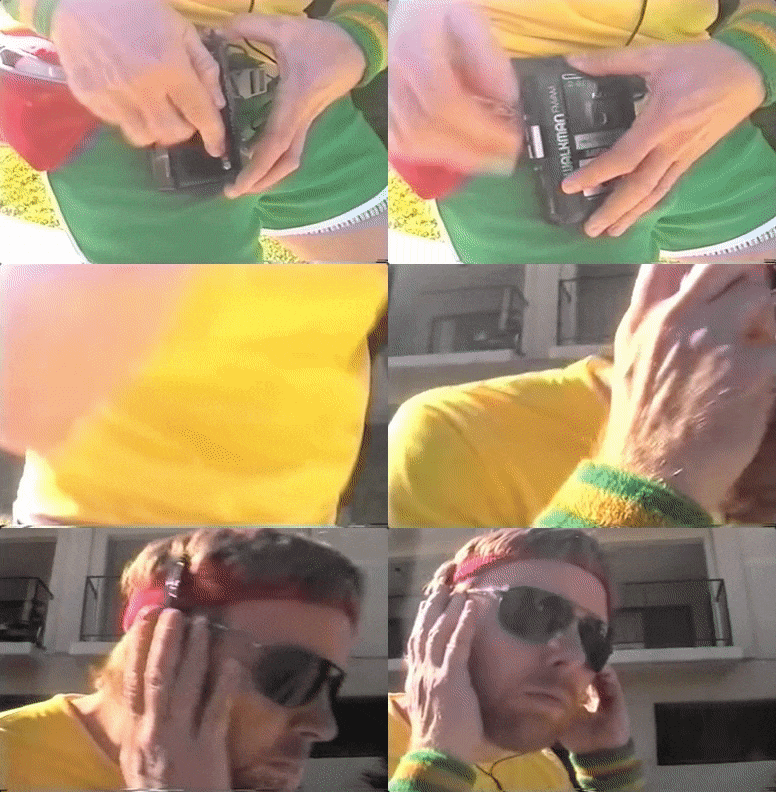
The Walkman is also back, and pink is the top trending colour for Walkman headphones. Colour preference in search data tells you this audience is shopping, not browsing.
If you sell consumer electronics, vintage gear, accessories, or audio equipment, the window here is open. The audience has already decided what it wants. It is looking for somewhere credible to buy it.
Typewriters Are Back – and This Time They Have Bluetooth
The third strand in this data is the one that connects everything.
“Mechanical keyboard” reached an all-time high this year. “Smart typewriter” is being searched more than ever. “Digital typewriter” more than doubled in searches over the past month. “Bluetooth typewriter” is the top trending typewriter type right now.
And then this: “typewriter club” broke out last month.
Community formation is the signal that a trend has legs. People do not form clubs around passing fads. They form clubs around things that have reshaped part of how they spend their time. Typewriter clubs appearing in the data alongside all-time highs for mechanical keyboards means this is not a quirky product category anymore. It is a lifestyle orientation.
“Typewriter keyboards” is also a breakout search, which means people are looking for the aesthetic and feel of a typewriter applied to their existing setup. That is a much bigger market than the dedicated typewriter buyer. It is every person who wants their desk to feel like something, rather than just function like something.
What Cyberdecks, Cassette Players and Typewriter Clubs Have in Common
The laptop is optimised for productivity. The Bluetooth earphone is optimised for convenience. The standard keyboard is optimised for speed. None of them are optimised for experience.
Search data in 2026 is showing, clearly, that a significant and commercially active audience has noticed this. They are not rejecting technology. They are upgrading it on their own terms. They want to build computers that fit their lives. They want to listen to music on a device that is only for music. They want to type on something that makes a sound and offers resistance.
This is not Luddism. It is connoisseurship.
What Tech Brands Should (and Definitely Should Not) Be Selling Right Now
Oversaturated Markets to Avoid: Generic “best wireless earbuds” roundups. Top-ten keyboard lists with no personality. Productivity content that assumes everyone wants faster and smoother. This audience has specifically rejected that framing. Content built around it is being scrolled past at pace.
Underserved Opportunities:
- Beginner cyberdeck build guides, component breakdowns, and use-case content that answers “what can a cyberdeck do”
- Nostalgic audio content that treats the iPod and Walkman as legitimate buying decisions, not guilty pleasures, with accessories, care guides, and honest comparisons
- Tactile typing content that connects the feel and sound of mechanical keyboards and typewriters to the broader lifestyle shift, not just the specs
- “Cyberdeck for music production” content, which has strong commercial intent and no clear owner yet
- Community-facing content around typewriter clubs and the growing DIY keyboard culture
The data shows clear white space for businesses willing to talk to the audience that exists, not the one the industry assumes still wants wireless everything.
The Tech Searches With the Most Commercial Intent Right Now
The searches showing the most immediate commercial signal right now:
- Cyberdeck build
- What can a cyberdeck do
- Cyberdeck for music production
- Secondhand iPod
- Portable cassette player
- Mp3 player with bluetooth
- Wired headphones
- Smart typewriter
- Digital typewriter with screen
- Mechanical keyboard
- Typewriter keyboard
These are not people window shopping. They are people mid-decision. Businesses with credible, useful content for these searches are capturing an audience already halfway to buying.
The Retro Tech Trends Worth Watching in 2026
Based on current trajectories:
The Cyberdeck Goes Mainstream: “Cyberdeck girly” and “cyberdeck for girls” as breakout searches signal the moment a trend crosses from enthusiast community to broader culture. The DIY computer is becoming a fashion object. Businesses that get there with accessible, aesthetic-aware content before this fully peaks will own a long-term category.
The Dedicated Device Counter-Movement: Wired headphones, portable cassette players, secondhand iPods and MP3 players trending at the same time is not coincidence. There is a cohort actively choosing devices that do one thing only. Brands that understand and celebrate this, rather than trying to convert these buyers back to wireless, will earn real loyalty.
The Tactile Typing Lifestyle: Typewriter clubs, mechanical keyboard all-time highs, and digital typewriter searches more than doubling in a month together suggest this has moved well beyond product preference. It is closer to a creative practice. Content that reflects that, rather than just reviewing products, will resonate with the most engaged part of this audience.
The 24-Day Action Plan for Tech Businesses
Week 1-2: Audit Your Language
- Review your existing content for productivity-first assumptions that exclude the experience-driven buyer
- Map your products or services to the specific searches people are making right now: cyberdeck builds, nostalgic audio, tactile typing
- Identify which underserved segment you are best placed to speak to: DIY tech builders, nostalgic audio buyers, or the mechanical keyboard and typewriter crowd
Week 3-4: Publish With Precision
- Create content using the exact vocabulary people are searching (“cyberdeck for music production,” “mp3 player with bluetooth,” “digital typewriter with screen”)
- Build at least one useful piece of content that answers a breakout search question directly: a build guide, a buyer’s comparison, a use-case breakdown
- Position around the experience and feel of the product, not just the specification
The Bottom Line
We are not watching a tech nostalgia trend play out. We are watching an entire generation of people decide that optimised-for-convenience is not the same as optimised-for-them, open a search bar, and start looking for businesses that understand the difference.
The search data does not lie: people are building custom computers, buying pink Walkmans, and joining typewriter clubs. They are looking for businesses that take that seriously.
